Roof Repair in Kerrville & the Texas Hill Country
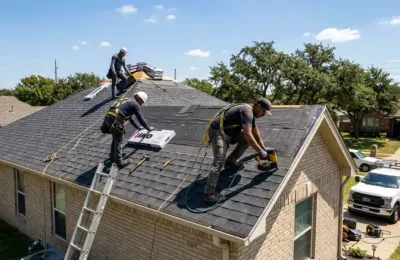
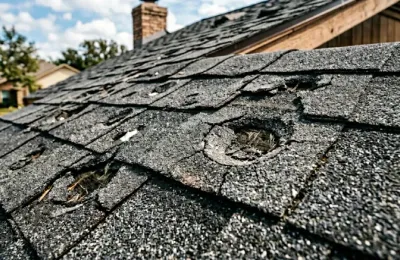
Roof repair covers everything from fixing a single leaking section to replacing a damaged valley, resealing flashing around a chimney or vent, or replacing blown-off shingles after a Hill Country storm. The goal is to stop the problem at its source before it becomes water damage inside your walls and ceilings. A good repair doesn't just cover the symptom — it identifies why the failure happened and fixes the underlying cause so the problem doesn't return in the next heavy rain.
If you're seeing water stains on your ceiling, missing or curling shingles, granules collecting in your gutters after rain, or daylight visible through your attic, you need a roof repair assessed now — not next season. Most roof leaks start as small, contained problems and become expensive ones because they're ignored through another storm cycle. The Texas Hill Country gets fast-moving, intense storms that can open up a vulnerable section overnight. The longer a leak goes unaddressed, the more likely it is to reach wall framing, insulation, and drywall — repairs that cost far more than the original roof fix would have.
Not every roof problem requires a full replacement. In many cases, a targeted repair — replacing a few damaged shingles, resealing a flashing joint, or repairing a valley that's pulling away — is the right call and will extend the life of the existing roof significantly. We'll tell you honestly what the scope is: if a repair makes sense, we'll fix it right. If the damage is widespread enough that continued repairs are throwing money at a declining system, we'll tell you that too and give you a straight quote on a replacement.
What's Included
- On-roof inspection to locate the actual leak source
- Damaged shingle removal and replacement
- Flashing repair and resealing
- Valley and ridge repair
- Chimney and vent sealing
- Adjacent weak point inspection
- Deck assessment — no patching over rot
- Same-area storm damage documentation
Why It Matters
It starts with getting on the roof and finding the actual source of the leak — not just where the water shows up inside, which is often several feet from where it's entering. Water travels along decking and rafters before it drips, which means the ceiling stain and the entry point rarely line up. Once the source is located, damaged materials are removed and replaced, flashing is resealed where needed, and everything nearby is checked for adjacent weak points that will fail in the next storm. We don't patch over rot or failing decking — if it's there, we call it out and fix it correctly before covering it back up.